DFN Generator and Block Analyser - now available


Introducing the new DFN tools in mXrap
Understanding structurally controlled instability remains one of the most important challenges in underground mining. While traditional structural assessments often rely on deterministic interpretations, the reality is that fracture networks are inherently variable and uncertain. The new Discrete Fracture Network (DFN) tools in mXrap address this challenge by enabling users to generate, calibrate, and analyse realistic fracture networks, and assess their implications for block stability and ground support performance.
The new workflow consists of two integrated components: the DFN Generator and the Block Analyser.
Building realistic fracture networks
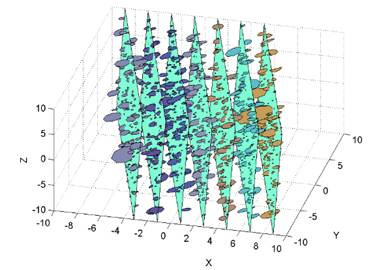
The DFN Generator creates statistically representative fracture networks based on measured structural data. For each joint set, the model characterises fracture orientation, size, and intensity, providing a three-dimensional representation of the rock mass fracture system. Initial parameter estimates are derived from mapping, boreholes, scanlines, and other structural datasets. These estimates are then refined through a calibration process in which synthetic fracture networks are sampled using the same methods employed during field data collection. By reproducing the original sampling conditions, the model accounts for the same observational biases present in the measured data, ensuring that the calibrated DFN accurately reflects the rock mass being assessed.
The result is a DFN model that provides a realistic statistical representation of the fracture network and forms the foundation for subsequent stability analysis.
From fractures to blocks
Once calibrated, the DFN is used to generate multiple fracture network realisations. Rather than relying on a single interpretation of the rock mass, the workflow creates many statistically equivalent fracture networks, capturing the natural variability that exists underground. For each realisation, mXrap automatically identifies removable blocks that form around the excavation surface. These blocks are accumulated across all simulations, creating a large dataset of potential instability scenarios that can be analysed probabilistically.
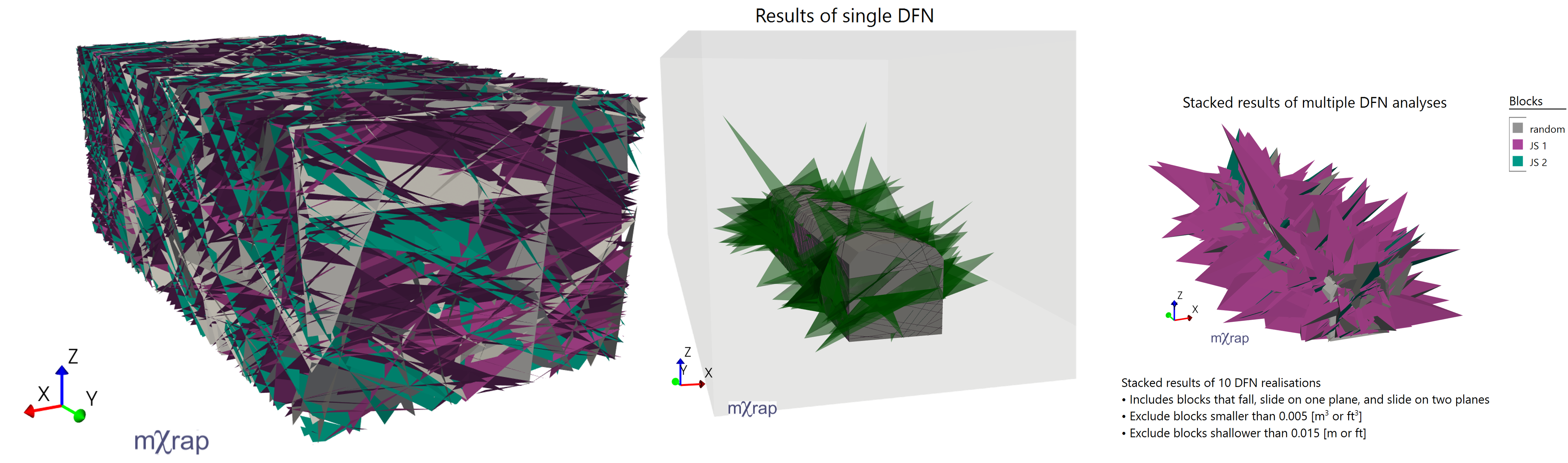
As additional simulations are completed, statistics such as block weight and frequency of occurrence progressively converge. This provides confidence that the accumulated block population adequately represents the range of structurally controlled failure mechanisms that may occur around the excavation.
Probabilistic block stability analysis
The Block Analyser evaluates the stability of each accumulated block using limit equilibrium methods.
Stability depends on three key factors:
- Block geometry
- Joint strength properties
- Installed ground support
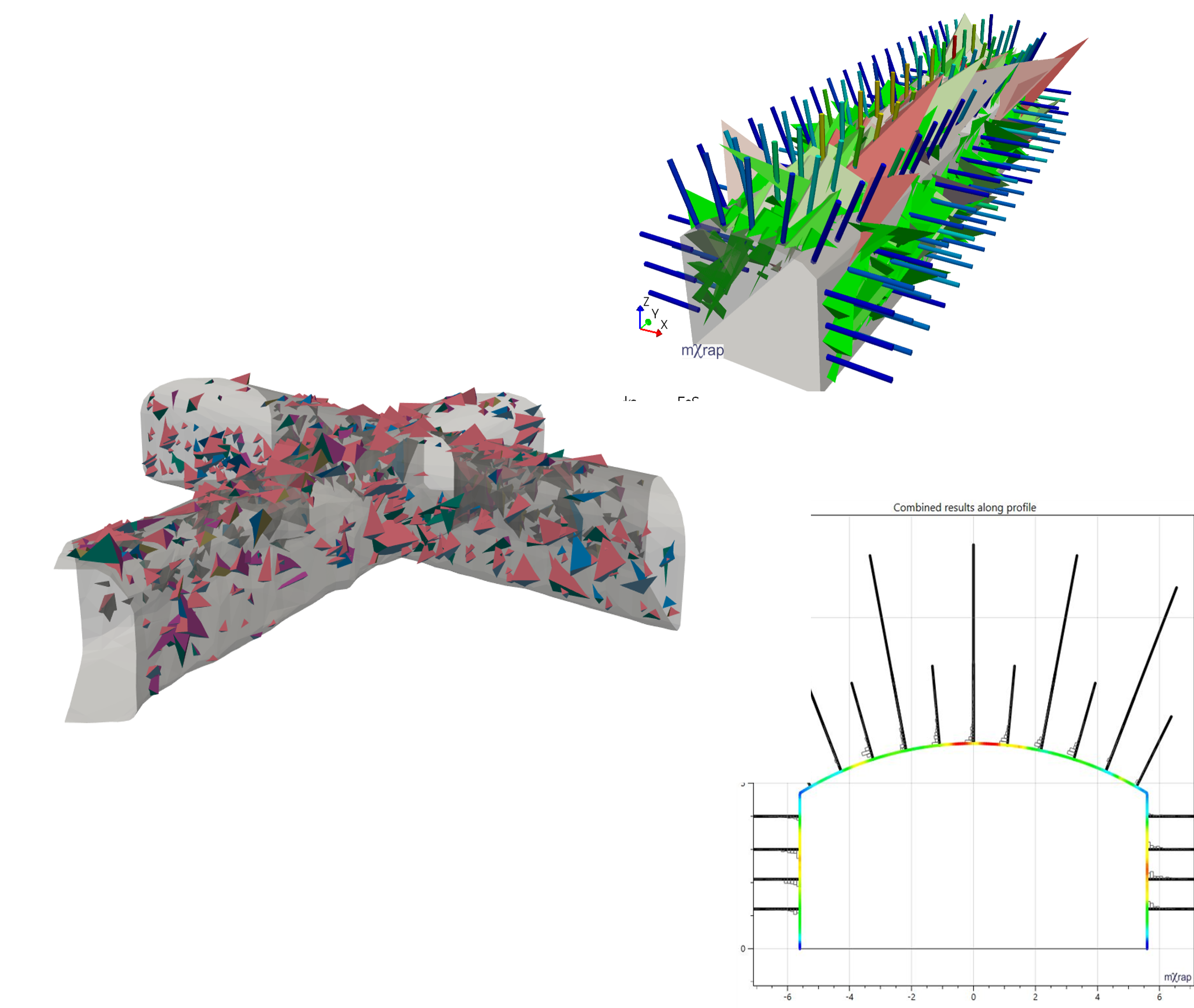
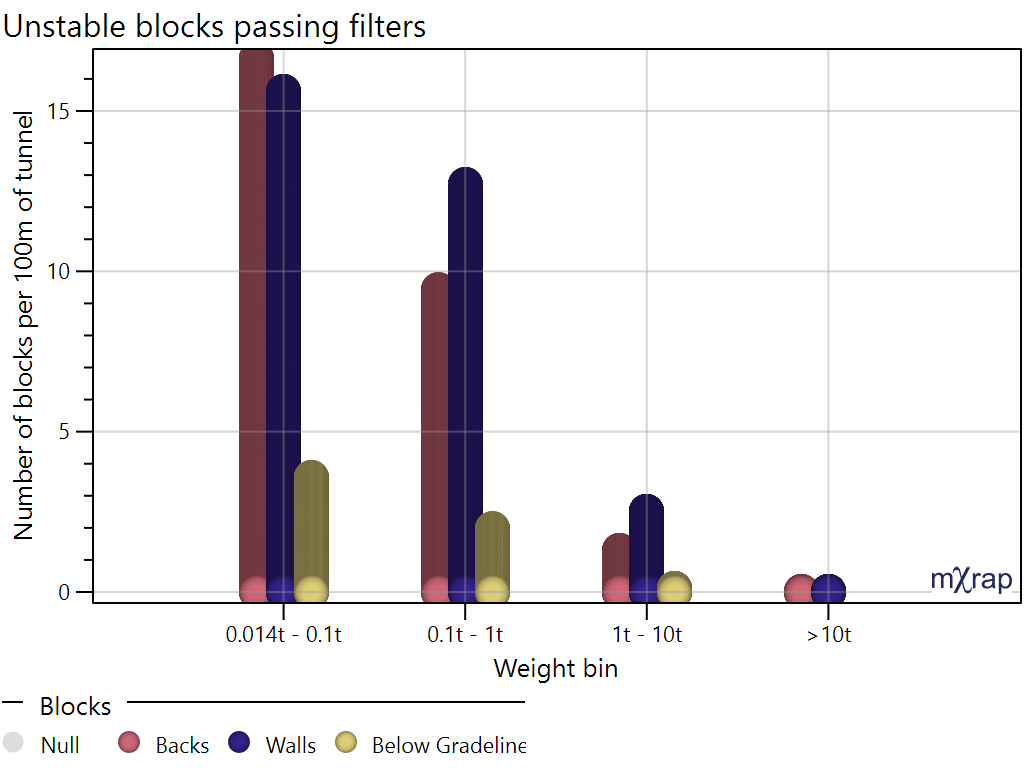
Potential failure mechanisms include direct falls, sliding on a single discontinuity, and sliding along the intersection of discontinuities. For each block, a Factor of Safety (FoS) is calculated by comparing the forces resisting movement with those driving failure. Joint strength parameters, including friction angle, cohesion, and dilation angle, can be assigned to each joint set, allowing the analysis to reflect realistic rock mass behaviour and discontinuity characteristics. To focus on meaningful operational risks, blocks can be filtered by criteria such as size, weight, location, and failure mechanism. This enables engineers to concentrate on blocks that are most likely to influence safety, dilution, production performance, or support requirements.
Evaluating ground support performance
One of the most powerful aspects of the workflow is the ability to assess ground support performance across thousands of potential block failure scenarios. Support standards can be virtually installed within the excavation and automatically incorporated into the stability calculations.
The resulting analyses provide insight into:
- The locations where instability is most likely to occur
- The magnitude of potential block failures
- The frequency of unstable blocks
- Ground support demand and reinforcement loading
This allows engineers to move beyond deterministic assessments and evaluate how support systems perform across a broad range of realistic geological conditions.
Supporting better geotechnical decisions
The true value of the mXrap DFN workflow lies in its probabilistic approach. Instead of asking whether a single block is stable, engineers can evaluate how frequently specific failure mechanisms occur across many plausible fracture network realisations.
This provides a more realistic understanding of geotechnical risk and creates a robust framework for comparing excavation geometries, support standards, and design alternatives. By combining DFN calibration, block accumulation, stability assessment, and support analysis within a single workflow, mXrap enables more informed, data-driven decisions for managing structurally controlled instability in underground excavations.