Seismic Monitoring
Seismic Activity Rate Monitor
System Overview
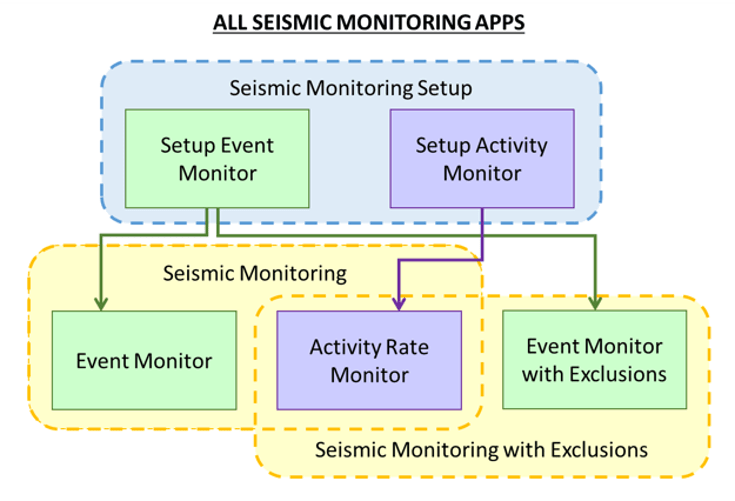
The seismic monitoring system consists of three applications:
- Standard Monitoring App - Basic seismic event monitoring
- Enhanced Monitoring App - Includes exclusion procedures and additional features
- Setup App - Configuration and initialisation tool
Both monitoring applications share the same activity rate monitoring functionality, while the enhanced version provides additional user interface elements and exclusion management capabilities.
Activity Rate Monitoring
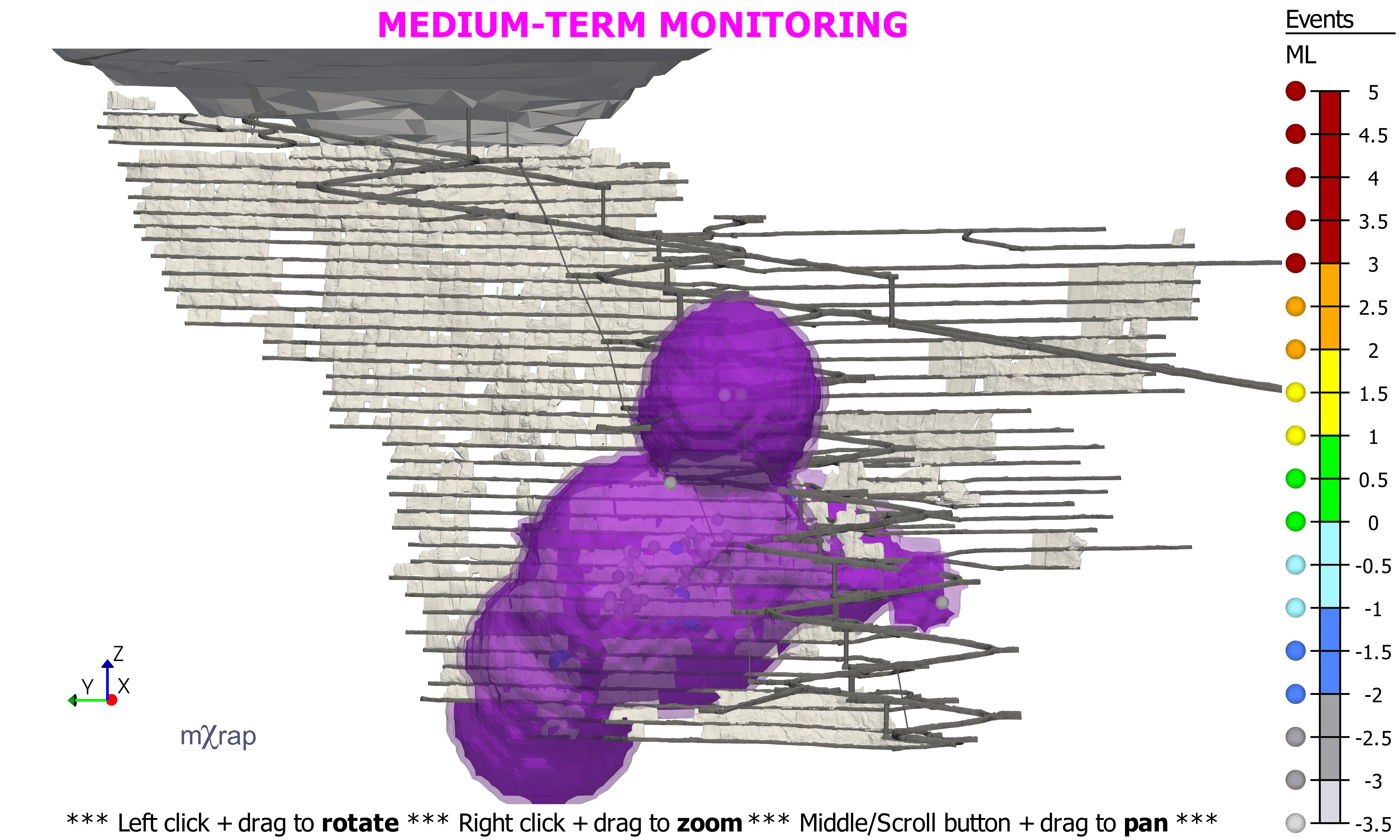
The system monitors seismic activity on two temporal scales:
- Short-term monitoring - Rapid detection of activity changes
- Medium-term monitoring - Trend analysis over extended periods
Hotspots are automatically identified based on predefined thresholds and displayed in dedicated tables. Users can switch between monitoring modes and interact with hotspots through:
- Visual highlighting of selected areas
- Automated level plan and longsection views
- Alert notifications for new hotspot detection
Configuration Setup
Step 1: Grid Definition
Define the spatial framework for activity assessment by specifying monitored mine areas.
Tighter grid spacing increases calculation time and reduces reload speed.
Step 2: Reference Rate Configuration
Establish baseline activity rates that account for:
- Location variability - System sensitivity and rock mass response differences
- Data quality - Select consistent datasets spanning several months
- Mining stability - Avoid periods with major operational changes
- Blast filtering - Use time-of-day filters to exclude blasting effects
- See Time Charts for details
Additional options include applying scaling factors or using constant reference rates across all grid locations.
Step 3: Monitoring Parameters
Configure the following operational parameters:
- Spatial radius around each grid point for activity measurement
- Temporal windows defining short-term and medium-term periods
- Event thresholds specifying minimum event counts for caution/alert triggers
Step 4: Activity Thresholds
Define trigger conditions using either:
Ratio-based Thresholds
- Simple linear function of reference rate
- Direct proportional relationship
Probability-based Thresholds
- Based on Marsan (2003)1 methodology for detecting seismicity rate changes
- P-value represents probability that current/reference activity ratio exceeds threshold
- Accounts for uncertainty differences between short monitoring periods and long reference periods
- Recommended for statistical rigor (see Marsan and Wyss 20112)
All configuration changes must be saved before applying to the monitoring window.
Operational Features
Target Users: Mine control room operators
Primary Functions:
- Real-time seismicity monitoring
- Event alert communication
- Site-specific exclusion area management
Key Capabilities:
- Automatic Data Updates - Eliminates manual reload requirements
- Alert System - Popup notifications for events and system status
- Spatial Visualisation - Exclusion area plotting and mine area isolation
- Navigation Tools - Automatic zoom/rotate to exclusion areas
- Distance Measurement - Calculate distances from survey points to nearest alerts